He Could Have. He Didn't. Why Hercules Is Still the Most Quietly Respectful Hero Disney Ever Made.
In 1997, Disney slipped something rare into a summer blockbuster about a demigod. Not strength. Not glory. Just a young man who closed his eyes, pulled a sleeve back up, and gently stepped away. Twenty-seven years later, that detail still matters.
There is a moment in the 1997 Disney film Hercules that most people missed the first time they saw it.
Meg — sharp-tongued, world-weary, and working reluctantly for Hades — stretches her ankle directly in front of Hercules' face. Her dress rides up around her calf. It is a deliberate move. She is trying to distract him. She is trying to manipulate him. She knows exactly what she is doing.
Hercules closes his eyes.
Later, she throws herself across his chest — again, deliberately. He does not lean in. He does not take advantage of her proximity. He reaches over, gently repositions her sleeve back onto her shoulder, and carefully pushes her away.
No lecture. No self-congratulation. No grand speech about virtue. Just a quiet, instinctive act of respect from a young man who had every excuse to behave otherwise — and chose not to.
It is one of the most understated character moments in the Disney animated canon. And it deserves to be talked about far more than it is.
The Summer of the Demigod
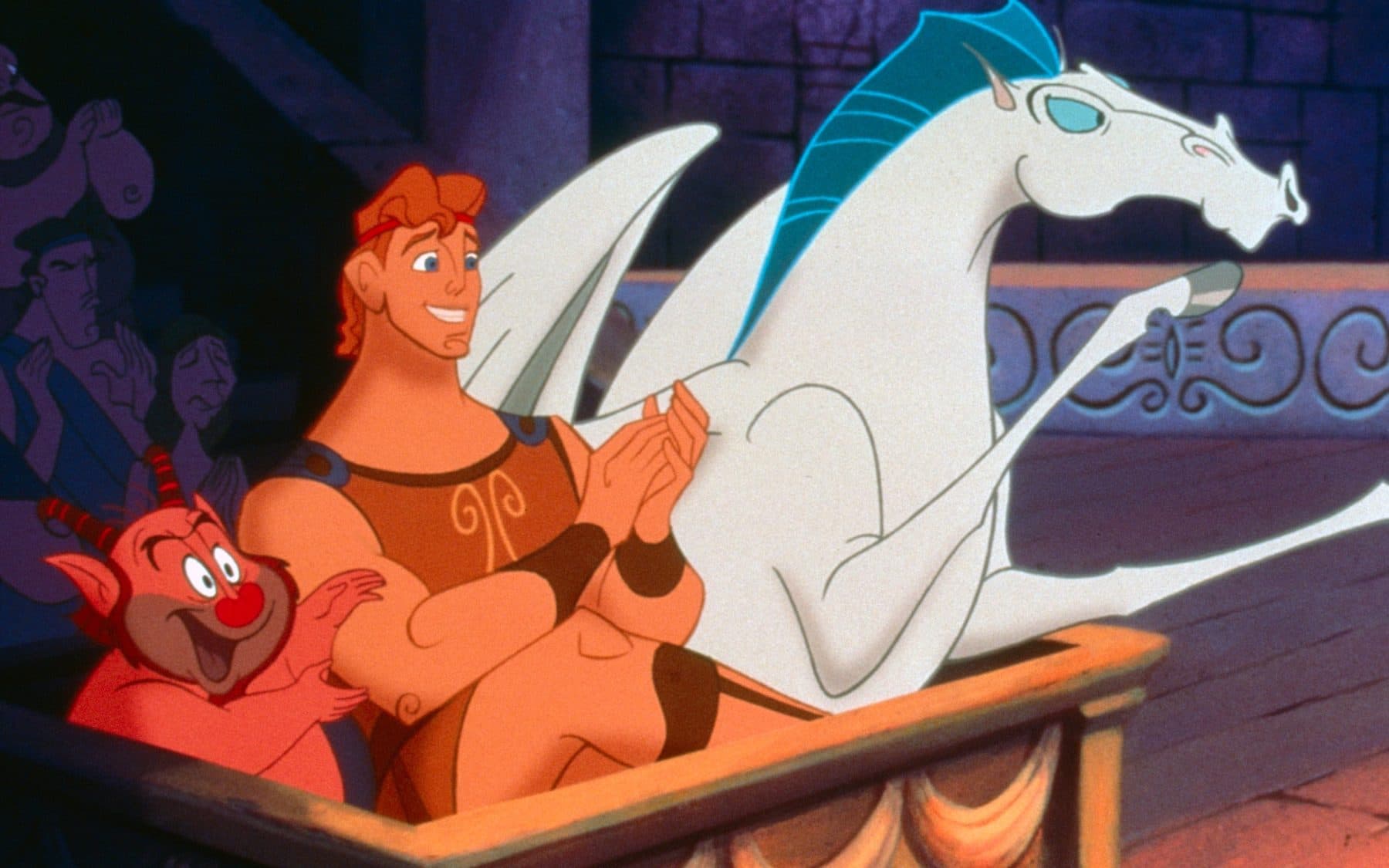
Hercules was released by Walt Disney Feature Animation on June 27, 1997, directed by Ron Clements and John Musker — the same pair behind The Little Mermaid and Aladdin. It arrived at the height of the Disney Renaissance, sandwiched between The Hunchback of Notre Dame and Mulan, and it was in many ways the most deliberately playful film the studio had made in years.
The film took considerable liberties with Greek mythology — Hera becomes a loving mother rather than the goddess who tormented Hercules in the original myths, the Muses narrate via gospel choir, and the entire story is filtered through the lens of American celebrity culture and ancient hero worship simultaneously. Phil, the satyr trainer voiced by Danny DeVito, essentially runs a sports academy on a remote island. Pain and Panic are comic-relief henchmen. Hades is a fast-talking Hollywood agent trapped in the underworld.
It was loud, funny, anachronistic, and enormously entertaining. It was also doing something quietly serious underneath all of that.
Clements and Musker were interested in what heroism actually means — not the strength version, not the fame version, not the merchandise version. The entire film is a meditation on the gap between being celebrated and being good. Hercules becomes famous. He gets the action figures and the sandal endorsements and the crowds chanting his name. And the film asks, with genuine seriousness, whether any of that is the point.
The answer it gives, in the end, is that a true hero is not the person who wins the most battles. It is the person who makes the right choice when no one is watching and nothing is at stake — except the dignity of another person.
The Point
Hercules closes his eyes. He straightens her sleeve. He steps back. He does not make a speech about it. He does not perform his virtue for an audience. He simply does the right thing, quietly, in a moment when no one would have noticed if he had done otherwise. That is what Disney smuggled into a summer blockbuster in 1997 — not a lesson, but a demonstration. Not a lecture, but a model. And twenty-seven years later, parents are still pausing the film to point at those two moments and say: that. That is what respect actually looks like.
Sources
- Wikipedia — Hercules (1997 film) — en.wikipedia.org
- Wikipedia — Disney Renaissance — en.wikipedia.org
- Walt Disney Feature Animation — Hercules, directed by Ron Clements and John Musker, released June 27, 1997
- Andreas Deja and Eric Goldberg — Directors of Character Animation, Walt Disney Feature Animation (1997)